

Institute for Applied Physics (IAP)
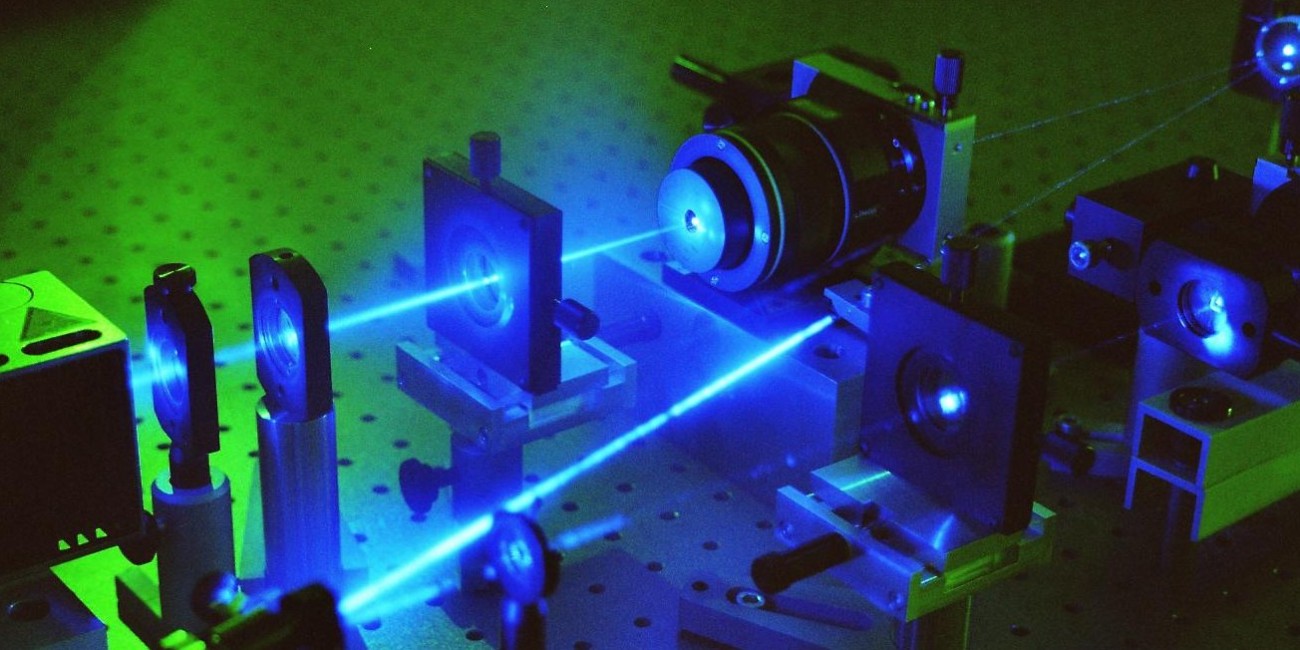
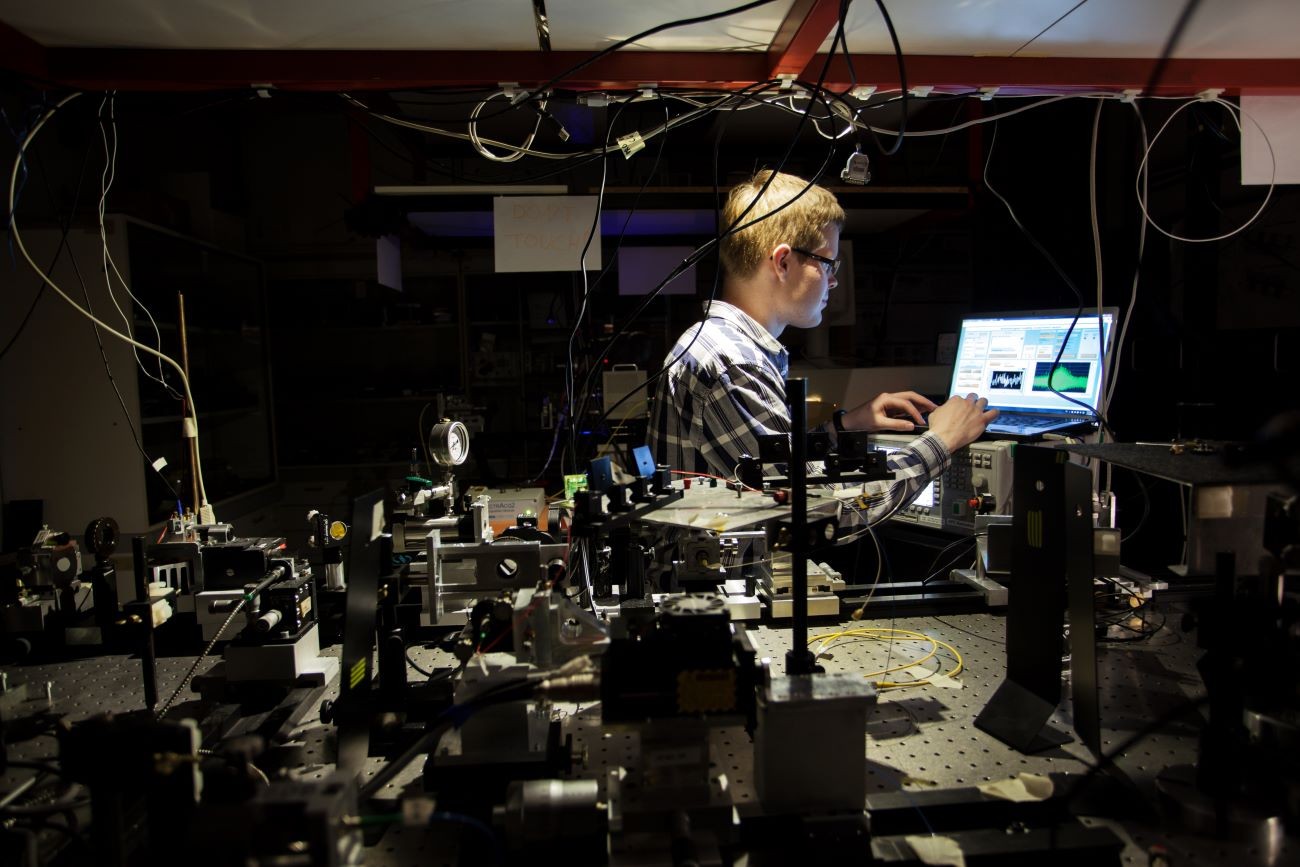
At the Institute for Applied Physics research is conducted in the field of modern optics. Novel laser systems and their properties are investigated and the quantum properties of light are used to store and cool atoms. In addition, new quantum encryption methods are explored with the aim of making our computers of the future more secure.


Talks
No events currently scheduled.
News and Events
-
![]() Picture: CNTR
![]() Picture: CNTR
CNTR Monitor 2026: Verification in an Era of Rapid Technological Change
Online Book Launch on November 5, 2026, 14:00 to 15:30 with editors and authors
This year’s focus is verification: only a few arms control treaties with formal verification regimes remain in force. Even so, reliable and internationally shared knowledge about activities that could endanger peace and security remains essential. The Monitor analyzes opportunities and challenges for verification in a broad sense, from AI and quantum sensing to biological attribution and space surveillance, as well as new actors and new approaches to assessing treaty compliance.
-
![]() Picture: AI generated
![]() Picture: AI generated
Department of Physics Celebrates Its 2026 Graduates
On 16 October 2026, the Department of Physics at TU Darmstadt honoured its graduates in a festive ceremony at the Maschinenhaus of TU Darmstadt.
A total of 69 Bachelor’s, 61 Master’s and 35 doctoral graduates were recognised for their successful degrees. It was a special occasion, marked by a festive atmosphere, award presentations and musical performances.
-
![]() Picture: Openbank
![]() Picture: Openbank
“€1,000 TU Darmstadt ‘Worry-Free’ Scholarships”
TU Darmstadt and Openbank are awarding ten scholarships regardless of academic grades
In partnership with Openbank (formerly Santander Consumer Bank AG), TU Darmstadt is awarding ten “€1,000 TU Darmstadt ‘Worry-Free’ Scholarships” by lottery. Students at TU Darmstadt are eligible to apply, regardless of their grades, provided they are enrolled and not on leave of absence. The application period runs from 28 September 2026 until 20 November 2026 at 11.59 pm.
-
![]() Picture: Paul Abendschein
![]() Picture: Paul Abendschein
Rhine-Main Universities successful in the Excellence Strategy
Funding serves to develop Frankfurt/Rhine-Main into a world-leading region of science
The Rhine-Main Universities (RMU) – the alliance of Goethe University Frankfurt, Johannes Gutenberg University Mainz and Technical University of Darmstadt – will receive funding in the high millions from 2027 as a University Excellence Consortium in the Excellence Strategy of the German federal and state governments. The alliance is now part of the twelve individual universities and three university alliances in Germany that have been awarded the title of University of Excellence. The RMU receive additional long-term funding from the federal government and from the states of Hesse and Rhineland-Palatinate for their ambitious strategy to develop Frankfurt/Rhine-Main into a world-leading academic hub.
-
![]()
![]()
Newsletter: Die neue Ausgabe ist da!
Der Herbst bringt kürzere Tage, aber mit dem Fachbereich Physik jede Menge Gelegenheiten, Forschung live zu erleben.
Von Beobachtungen auf zwei Hemisphären bis zur Frage, wie kosmische Strahlung im Labor entsteht: Auch in den kommenden Monaten laden wir Sie herzlich ein, mit uns die Physik zu entdecken.
-
![]() Bild: Patrick Bal
![]() Bild: Patrick Bal
Neu am Fachbereich Physik: Professorin Tina Ebert
Seit dem 15. September verstärkt Tina Ebert den Fachbereich Physik als neue Professorin am Institut für Angewandte Physik und leitet dort die Gruppe „Lasergetriebene Fusionsphysik“.
Die 33-jährige Wissenschaftlerin, die an der TU Darmstadt studiert und promoviert hat, war zuletzt am Lawrence Livermore National Laboratory in Kalifornien, USA tätig – zunächst als Postdoc und dann als dauerhafte Wissenschaftlerin. Wir haben Professorin Ebert zu ihrem Start an der TU Darmstadt ein paar Fragen gestellt:
-
![]() Bild: TURM Observatory
![]() Bild: TURM Observatory
Sternennacht „Herbst Edition“ – Livebeobachtung | 07.10.2026
Kommen Sie mit auf eine interaktive Reise in die Tiefen des Universums mit den Teleskopen des TURM Observatoriums in Namibia und Spanien
Bei der Sternennacht „Herbst Edition“ erwartet Sie eine interaktive Reise in die Tiefen des Universums: Erstmals wollen wir – sofern das Wetter mitspielt – gleichzeitig mit den ferngesteuerten Teleskopen des TURM Observatoriums in Namibia und in Spanien beobachten.
-
![]() Picture: IAP | AI-generated
![]() Picture: IAP | AI-generated
How Moving Atoms Agree on a Common Direction of Light
Study from the Institute for Applied Physics published in “Physical Review Letters”
Research teams at the Institute for Applied Physics at TU Darmstadt and the RPTU Kaiserslautern-Landau have demonstrated for the first time that, disordered atoms in permanent motion can nonetheless jointly emit directed light into a single direction despite neither the atoms nor their surrounding environment exhibiting a distinguishing directionality. Furthermore, the magnitude of this asymmetry can be controlled.
-
![]() Picture: IAP | TU Darmstadt
![]() Picture: IAP | TU Darmstadt
Securing Information in Fading Quantum Signals
New analysis method unlocks hidden information in fading matter-wave interference
Imagine watching dozens of pendula swing in perfect synchrony. When they move together in a regular pattern, their collective motion is easy to follow and gives a clear signal for observing the oscillation. Over time, however, each pendulum drifts ever so slightly out of step. The collective motion appears to dissolve into disorder. Surprisingly, if you keep watching, the pattern eventually returns as the pendulums fall back into synchrony.
-
![]()
![]()
Physik im Fokus: Der Fachbereich Physik in der aktuellen hoch³
Spitzenforschung, internationale Publikationen und wegweisende Themen aus dem Fachbereich Physik
Die neue Ausgabe der Universitätszeitung hoch³ 3/2026 ist erschienen und zeigt einmal mehr, wie vielfältig und zukunftsorientiert die Forschung am Fachbereich Physik der TU Darmstadt ist. Von aktueller Spitzenforschung und renommierten Publikationen über astronomische Beobachtungen und interdisziplinäre Forschung bis hin zu nachhaltigen Laboren reicht das Spektrum der Themen.